

AI will redefine the healthcare landscape by providing autonomous, proactive, and predictive solutions. From chronic disease management to population health analytics, AI-Centric devices are poised to become the cornerstone of future healthcare systems.
Medical devices evolution: Starting as single-function diagnostic tools with predefined capabilities, these early systems provided the foundation for more advanced devices by introducing basic automation and reliability in critical applications. As technology advanced, medical devices became more sophisticated, incorporating microprocessors and software to enable adaptive and multi-functional capabilities. The next step led to connected devices, leveraging IoT for real-time data sharing and remote monitoring, and personalized care.
- Mechanical tools: thermometers, stethoscopes, sphygmomanometers,…
- Basic embedded systems: infusion pumps, pacemakers,…
- Intelligent Devices: Defibrillators, Insulin pumps,…
- Connected devices: Remote patient monitoring systems, Wearable,…
AI as a Medical Device (AIaMD): The advancement of computational power, data availability, and innovative algorithms will further enhance the capabilities of medical devices providing a boost to AI-centric medical devices. AI as a medical device is not just a technological milestone but a paradigm shift that enables proactive, predictive, and personalized healthcare. As we move forward, the potential for AI to reshape the medical device landscape is limitless, ensuring better patient outcomes and a more efficient healthcare ecosystem.
“AIaMD refers to medical devices or software that leverage Artificial Intelligence (AI) algorithms to process data and provide diagnostic, therapeutic, or monitoring solutions.”
Unique capabilities and transformative potential of AIaMD:
- Data-driven decision making
- Adaptive learning capability
- Autonomous or semi-autonomous operation
- Multii-modal data integration and inference
The convergence of several advanced technologies is driving the adoption and evolution of AIaMD, such as:
- High-Performance Computing (HPC), edge computing and Edge AI
- Advanced Sensors, IoT devices and cloud integration
- Foundation models and Federated learning
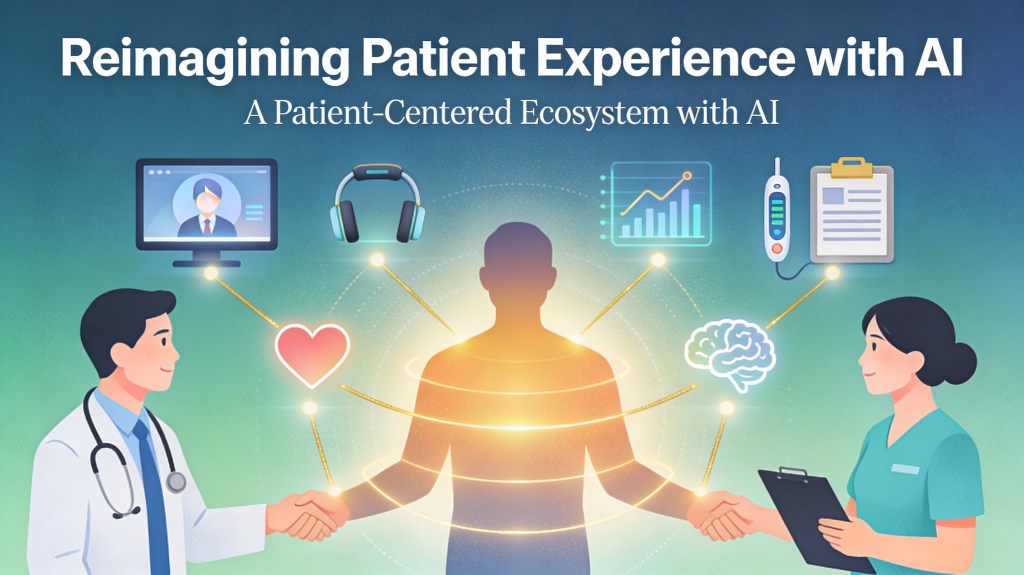
AI as a medical device (AIaMD) application shall encompass diagnostics, treatment, monitoring, and preventive care, making it indispensable in both clinical and patient-centered settings. Potential healthcare application, AIaMD can transform:
- Diagnostic: enhanced accuracy and accessibility
- Patient Monitoring: Autonomous and real-time decisions
- Personalized: Proactive and predictive Health solutions
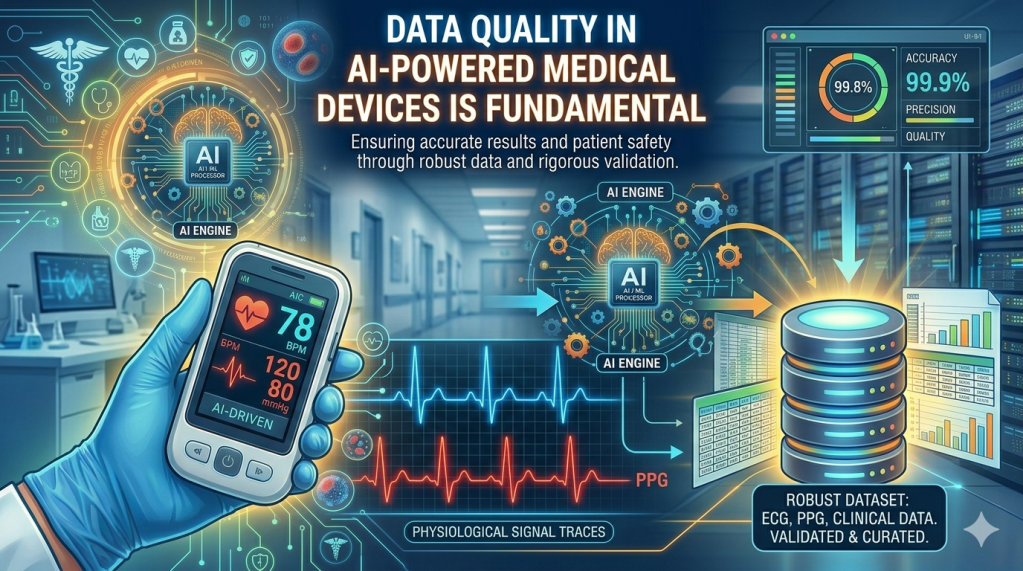
Key considerations: Regulatory frameworks and compliance standards are critical for ensuring the safety, effectiveness, and ethical use of AI as a Medical Device (AIaMD). Data integrity and privacy, explainability, interoperability, and bias should be addressed through regulatory frameworks to bring safe, trustworthy AIaMD solution.
What’s next? The journey of AI in medical devices has just begun. From early diagnostics to robotic surgeries and autonomous patient monitoring, the possibilities are endless. With continued advancements in technology, AIaMD is poised to become an indispensable part of healthcare systems worldwide.

 Technology and Management